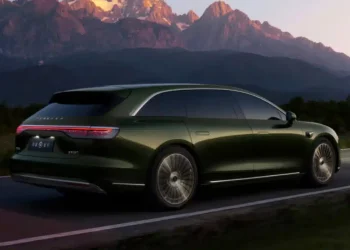


Major technology corporations are aggressively entering the electric vehicle arena. This strategic pivot responds directly to plateauing smartphone sales. Companies like Huawei, Xiaomi, and Foxconn now invest heavily in EV development. These tech giants EVs bet leverages their core expertise in software, batteries, and consumer electronics. The convergence between consumer tech and automotive manufacturing is accelerating rapidly. Electric vehicles and smartphones share fundamental similarities. Both rely on software-defined architectures and advanced lithium-ion batteries. Consequently, this shift represents a logical expansion for firms seeking new growth channels.
The International Data Corporation projects a slight decline in global smartphone shipments for 2026. This forecast pressures tech manufacturers to explore alternative revenue streams. The electric vehicle market presents a massive adjacent opportunity. Tech giants EVs initiatives capitalize on their existing supply chains and R&D capabilities. They aim to redefine transportation with integrated software and connectivity. The move is not merely about building cars but creating smart mobility ecosystems. This trend signals a fundamental reshaping of both the tech and automotive industries.
Xiaomi’s Ambitious Automotive Venture
Chinese smartphone leader Xiaomi has launched a dedicated automotive subsidiary. The company aims to blend industrial manufacturing with smart software and AI. Xiaomi’s first vehicle, the SU7 sedan, launched in 2024 with a top speed of 265 km/h. It runs on Xiaomi HyperOS, creating seamless integration with users’ phones and smart homes. Founder Lei Jun announced a massive long-term commitment. He pledged to invest tenfold from the core technology level. Xiaomi’s goal is to rank among the world’s top five automakers within two decades. The company built a proprietary EV factory featuring an advanced die-casting method. This move distinguishes its approach from traditional automakers and other tech entrants.
Sony and Honda’s Collaborative AFEELA Brand
Sony and Honda formed a strategic joint venture in 2022. Their collaboration, named Sony Honda Mobility, produces vehicles under the AFEELA brand. The partnership combines Honda’s automotive manufacturing prowess with Sony’s entertainment and sensor technology. The first model, AFEELA 1, is scheduled for delivery in late 2026. It will feature advanced driver-assistance systems and an interactive personal agent. A notable innovation is the external Media Bar display. This screen can show charging status, weather, or personalized messages. This venture exemplifies how tech giants EVs strategies often involve partnerships. They merge hardware mastery with software and user experience innovation.
Foxconn’s Multi-Pronged EV Strategy
iPhone manufacturing titan Foxconn is pursuing a broad electric vehicle strategy. It established Foxtron through a joint venture with Yulon Motor. Furthermore, Foxconn introduced the MIH Open EV Platform. This standardized framework lets other companies develop EVs more quickly and cheaply. Foxconn also builds its own vehicle portfolio, including SUVs, sedans, and buses. Chairman Young Liu stated the vision is to create an interconnected world with smart technologies. The company provides next-generation solutions to partners globally. Therefore, Foxconn’s approach encompasses manufacturing, platform development, and supply chain enablement. This multifaceted model positions it as a central infrastructure player for the emerging EV industry.
The Supplier Ecosystem: Huawei and Samsung
Some corporations choose to supply critical components rather than build whole cars. Huawei is a prime example, developing the HarmonyOS Cockpit. This system features multi-screen displays, voice integration, and intelligent driving system connectivity. Similarly, Samsung supplies camera modules, the Exynos Auto processor, and batteries for EVs. LG creates electric powertrains through LG Magna e-Powertrain. It also manufactures vehicle displays and digital cockpits. Chinese phonemaker OPPO partners with automakers like SAIC Motor to integrate its OPPO Intelligent Drive software. Vivo offers its Jovi InCar solution for phone-to-dashboard connectivity. These supplier roles allow tech giants EVs influence without the massive capital risk of full-scale manufacturing.
The underlying drivers for this shift are clear. Electric vehicles are essentially computers on wheels. Their value increasingly resides in software, user interface, and battery management. These are domains where technology firms hold deep expertise. The traditional automotive industry is undergoing a software revolution. Tech companies perceive an opening to disrupt established players. Their entry promises to accelerate innovation in connectivity, autonomous driving, and energy efficiency. However, they also face significant challenges. Automotive safety standards, complex supply chains, and lengthy development cycles differ sharply from consumer electronics.
The long-term impact on the global auto industry will be profound. New competitors will force rapid evolution in vehicle design and functionality. The lines between transportation and digital ecosystems will continue to blur. Consumers may soon choose vehicles based on software integration as much as horsepower. This battle for the smart electric vehicle platform is just beginning. The strategies of these tech giants EVs will define the next decade of personal mobility. Their success depends on merging Silicon Valley agility with automotive-grade rigor and reliability.