
The Huawei AI strategy has quickly evolved from a defensive pivot to a bold global expansion. Once hampered by U.S. sanctions, Huawei has reemerged as China’s top contender in the artificial intelligence race. It now competes directly with global leaders like Nvidia.
From chip design to AI models and cloud infrastructure, Huawei now plays a role across the full AI value chain. The company had to transform after the U.S. placed it on a trade blacklist in 2019. That move cut off access to key suppliers, including TSMC.
Forced to adapt, Huawei shifted from consumer electronics to AI chips, enterprise cloud, and industrial AI solutions. Paul Triolo, SVP for China at DGA-Albright Stonebridge Group, said the company had no choice. “Huawei had to change direction… due to constant external pressure,” he explained.
One of the earliest milestones in the Huawei AI strategy came in 2019. That year, the company launched its Ascend 910 chip, an AI processor meant to rival Nvidia’s offerings. Huawei followed with improved versions, including the 910B and now the 910C, currently preparing for mass rollout.
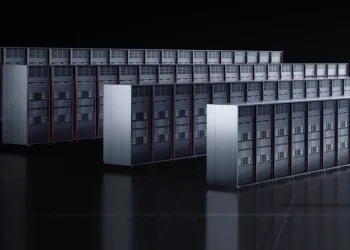
In April 2024, Huawei introduced AI CloudMatrix 384, which connects 384 Ascend 910C chips. Analysts say this AI system even beats Nvidia’s GB200 NVL72 in some performance areas. Huawei also created its own CUDA alternative, CANN, to support AI development within its ecosystem.
Forrester analysts noted Huawei isn’t just catching up. “It’s redefining how AI infrastructure works,” they wrote. However, they cautioned that Huawei still lacks wide developer integration compared to Nvidia.
Huawei’s Pangu AI models form another core pillar of its strategy. Unlike general-purpose tools like GPT-4, Pangu supports industry-specific uses. These include mining, healthcare, finance, and manufacturing.
Huawei said Pangu has already been used in over 20 sectors. In May 2024, the company deployed 100 self-driving mining trucks. These trucks use Pangu AI, 5G, and Huawei Cloud to transport materials autonomously.
Jack Chen, VP for Huawei’s oil and mining tech unit, said the solution is already scalable. “We can deploy this in Central Asia, Africa, Latin America, and the Asia-Pacific,” he added.
The Huawei AI strategy also embraces openness. In 2024, Huawei open-sourced the Pangu model. The goal is to encourage global adoption and grow an AI ecosystem around its Ascend chips.
Huawei Cloud, launched in 2017, powers this growing AI stack. It runs the company’s AI data centers and industrial applications. In 2023, Huawei’s ICT infrastructure unit—home to AI, 5.5G, and enterprise solutions—became its top revenue source, pulling in 362 billion yuan.
Despite sanctions, Huawei has closed critical gaps. The 2023 launch of a 5G smartphone shocked many observers. Analysts had believed Huawei couldn’t build advanced chips without TSMC. However, the company worked with Chinese chipmaker SMIC to prove otherwise.
Jeffrey Towson from TechMoat Consulting explained their approach. “They’re using clusters of smaller chips to reach Nvidia-level performance,” he said.
Nvidia CEO Jensen Huang also acknowledged Huawei’s rise. He recently called Huawei “one of the most formidable technology companies in the world.” Huang warned that Huawei could replace Nvidia in China if U.S. chip restrictions persist.
The Huawei AI strategy is also going global. The company is targeting Belt and Road Initiative countries with its AI platforms. These emerging markets need infrastructure and are less bound to U.S. tech. Huawei is repeating the strategy it used in telecom.
Of course, Huawei faces hurdles. It must convince developers and enterprises to switch from Nvidia’s tools to its own. It must also prove its AI chips and models can scale securely and efficiently.
But Huawei’s vertical approach offers advantages. It controls the full stack—from chips to cloud to applications. This puts it in a unique position to build reliable, integrated AI platforms.
It’s too early to call Huawei the AI leader. However, the Huawei AI strategy has already reshaped the competitive landscape. It fuels China’s drive for tech independence and pressures global rivals to innovate faster.