

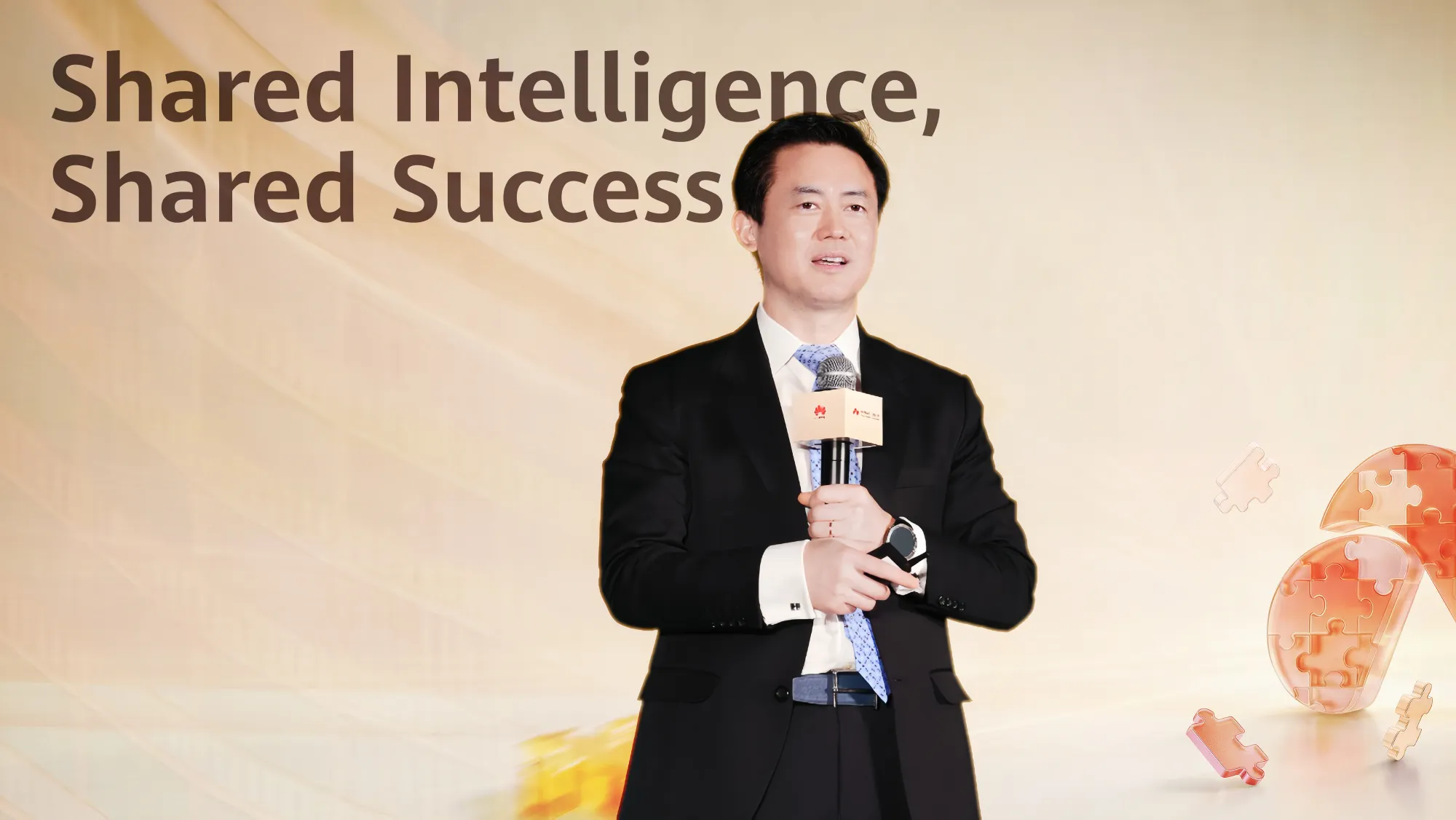
Huawei Cloud has unveiled an ambitious three-pillar strategy to dominate the artificial intelligence and cloud market. Senior Vice President Charles Yang detailed the plan at a partner event in Singapore. The strategy focuses on computing power, algorithms, and data security. Consequently, Yang expressed confidence that Huawei Cloud will rank among the world’s top three cloud providers within three years. This bold vision accompanies new global partner policies for 2026. These policies emphasize trust, profitability, and ecosystem growth. The announcement signals Huawei’s aggressive push despite ongoing geopolitical tensions.
Yang highlighted the company’s significant and consistent research investment. Huawei allocates 10% of its annual revenue to research and development. This funding supports technological leadership across segments. Moreover, Yang stated Huawei’s products now have zero reliance on the US supply chain. This independence, he claims, provides confidence to support partners “no matter what happens.” The three-pillar framework is the technical foundation for this global ambition. Each pillar addresses a core component of modern AI-driven cloud services.
Pillar One: Systemic Innovation in Computing Power
Charles Yang openly acknowledged that Huawei does not lead in raw computing power. However, he argued the company competes through “systematic innovation.” Specifically, Huawei bundles its Ascend AI chipsets into a unified system called the Cloud Matrix 384. Yang claims this system delivers 1.7 times more computing power than a comparable NVIDIA NVLink setup. He emphasized competing with an “army” rather than a single “soldier.” Therefore, systemic integration is their chosen battleground.
The approach also tackles latency and safety issues inherent in clustered computing. Yang stated Huawei has solved these problems with its Cloud Matrix design. He confidently predicted Huawei will become number one in computing power. This claim rests on leveraging China’s manufacturing scale and Huawei’s networking expertise. The company leads in 5G and fiber optics, which are critical for connecting distributed compute resources. This pillar reflects a strategic pivot from competing on individual chips to winning with integrated systems.
Pillar Two: Industry-First Algorithm Development
For algorithms, Huawei adopts a pragmatic, industry-focused approach. The company chooses to compete on the tangible value it delivers to specific sectors. In China, Huawei Cloud collaborates with banks, ports, and steel companies. It has developed over 500 AI applications across 35 different industries. Yang explained the strategy involves moving these proven industry solutions to the cloud. This makes it easier for global partners to deploy and market them.
Simultaneously, Huawei supports open-source models and large language models from other countries. This openness aims to attract customers who wish to use various foundational models. The company’s flagship Pangu AI model is a central project. Yang guaranteed that Pangu will rank among the world’s top three AI models within three years. To achieve this, Huawei is recruiting global AI talent and dedicating substantial computing resources. The dual focus on industry applications and a top-tier foundational model creates a compelling value proposition.
Pillar Three: Data Security and Proven Resilience
Data security forms the third and, according to Yang, most distinctive pillar. Huawei leverages its decades of experience in data management, dating back to its 1987 founding. Yang cited a massive scale of defensive experience. Since facing US restrictions, Huawei has defended against over 450 billion cyberattacks. This equates to more than one billion attacks daily on its data centers. Yang argued this constant siege has uniquely hardened its security capabilities.
Therefore, Huawei Cloud can offer a compelling guarantee of data safety. Yang declared Huawei is “number one” globally in this defensive capability. This pillar is a direct response to widespread concerns about cloud security, especially for sensitive industries. It transforms a geopolitical liability—being a frequent attack target—into a marketable strength. The message to potential customers is clear: no other cloud provider has been tested so severely and continuously.
Global Partner Ecosystem and Long-Term Commitment
The new 2026 partner policies are integral to the strategy’s execution. Huawei Cloud promises clear business boundaries and a focus on partner profitability. These policies will remain fixed for three years, providing stability for partners. The goal is to cultivate a self-sustaining, thriving ecosystem. Huawei acts as a platform provider, enabling partners to build and sell solutions. This approach is crucial for gaining market share in regions where Huawei faces political headwinds.
Yang reported that Huawei and its partners achieve record growth and profits yearly. This success, he stated, signifies global acceptance of Huawei’s technology. The partner network is the channel for delivering the three-pillar value proposition. By ensuring partner profitability, Huawei incentivizes the ecosystem to scale rapidly. This partner-first model is a calculated effort to bypass direct commercial and political barriers in key markets.
Ambition and Geopolitical Context
Charles Yang’s closing statement was unequivocal: “Huawei Cloud, maybe in the coming three years, will become the top three in this world.” This ambition is set against a backdrop of intense US-China tech competition. Huawei’s claim of US supply chain independence is a direct rebuttal to sanctions. The entire strategy positions Huawei Cloud as a resilient, secure, and technologically advanced alternative.
The focus on systemic computing, practical AI applications, and ironclad security addresses major customer pain points. If Huawei can execute this vision while maintaining partner trust, it has a viable path to the top tier. The coming years will test whether technological innovation and ecosystem leverage can overcome significant geopolitical friction. Huawei Cloud’s three-pillar plan is its blueprint for that battle.