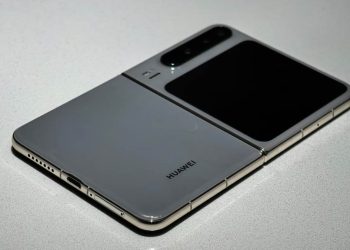


Huawei has firmly cemented its leadership in China’s foldable smartphone market, capturing a dominant share in 2025 and widening the gap with both domestic and international rivals. New industry data shows the company accounted for more than 60% of total foldable phone shipments in China, underlining Huawei’s growing strength in premium hardware, in-house chip development, and its tightly integrated HarmonyOS ecosystem.
According to market insights shared by Smart Chip Insider on Weibo, Huawei controlled 66.6% of the Chinese foldable smartphone market in 2025, placing it far ahead of competitors such as Honor and Samsung.
Huawei’s Foldable Strategy Pays Off
Huawei’s dominance did not happen overnight. The company has consistently invested in foldable innovation over several product cycles, refining hinge durability, display technology, and user experience. In 2025, this strategy paid off as Huawei expanded its foldable portfolio with distinctive designs and strong performance.
Key devices driving this growth include the Huawei Mate X7, the experimental Mate XTs tri-fold, and the compact yet premium Pura X. These devices stood out for their novel form factors, top-tier build quality, and smooth software experience powered by HarmonyOS.
Huawei’s use of advanced Kirin processors, including 5G-capable variants, further strengthened its appeal in the high-end segment, particularly at a time when Chinese consumers increasingly value domestic innovation and ecosystem integration.
How Competitors Performed in 2025
While Huawei dominated, other brands continued to compete for the remaining share of China’s foldable market:
- Honor ranked second with 10.9% market share, driven by devices such as the Magic V5 and the clamshell-style V Flip 2, which gained attention for their slim profiles and competitive pricing.
- Samsung placed third with 6.8%, despite launching its first triple-foldable device. However, the Korean giant struggled to outperform local brands on their home turf.
- Vivo followed with 6.1%, while Xiaomi secured 4.4% of the market.
- OPPO and Motorola trailed further behind, rounding out the rankings.
The data highlights a clear trend: Chinese brands, led overwhelmingly by Huawei, are setting the pace in foldable innovation within China.
Why Huawei Is Winning the Foldable Race
Several factors explain Huawei’s commanding position in the Chinese foldable smartphone market:
First, product diversity. Huawei now offers multiple foldable formats, including book-style, clamshell, and tri-fold designs, appealing to different user preferences.
Second, hardware-software integration. HarmonyOS has matured into a polished platform optimized for large and flexible displays, delivering seamless multitasking and continuity across Huawei devices.
Third, brand trust and loyalty. Huawei has cultivated strong domestic support, particularly as it emphasizes self-reliance through in-house chipsets and software development.
Finally, innovation leadership. Features such as improved hinges, thinner bodies, and enhanced durability have helped Huawei overcome early foldable skepticism and push the category into the mainstream premium segment.
Competition Set to Intensify in 2026
Looking ahead, competition in the foldable market is expected to intensify in 2026. Chinese manufacturers are likely to accelerate innovation, while global players look to reclaim lost ground.
One of the most anticipated developments is the expected entry of Apple into the foldable smartphone space. Early reports suggest the first foldable iPhone could resemble Huawei’s Pura X in form factor, potentially bringing new attention to the segment. However, Apple’s impact in China remains uncertain, especially against deeply entrenched local brands.
Outlook for Huawei and the Foldable Market
Huawei’s 66.6% share in 2025 positions it as the undisputed leader of China’s foldable smartphone market. More importantly, it signals a broader shift in the global smartphone industry, where Chinese manufacturers are no longer just competing on price, but defining the future of premium device categories.
As foldables move closer to mainstream adoption, Huawei’s early investment, ecosystem control, and design leadership give it a strong advantage. If the company maintains this momentum, 2026 could further solidify Huawei’s role as the benchmark for foldable smartphones—not just in China, but globally.