

Chinese AI company Zhipu AI has announced a significant technological milestone. The company, which operates as Z.ai, claims it trained its latest model using only domestic Huawei hardware. This achievement marks the first time an advanced AI model has been built entirely on a Chinese hardware stack. The model, named GLM-Image, employs a hybrid architecture for generating both images and language. The training was conducted on Huawei’s Ascend Atlas 800T A2 servers. These servers use Huawei’s own Kunpeng 920 processors and Ascend 910 AI accelerators. Consequently, this development represents a step toward China’s goal of semiconductor and AI independence.
Zhipu AI did not disclose critical details about the training process. The company did not reveal how many servers were used or the duration of the training. This lack of information makes it difficult to assess the efficiency compared to Western alternatives. However, the mere fact of a completed training run on an all-Huawei hardware stack is symbolically important. It demonstrates the viability of China’s domestic AI ecosystem amid stringent US export controls on advanced GPUs. For Zhipu, it is a statement of technological self-reliance and a marketing coup.
Technical Details of the Huawei Hardware Stack
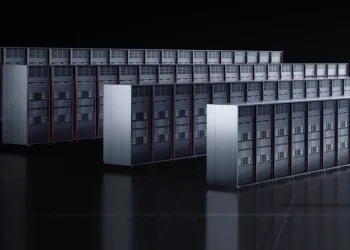
The training platform was the Huawei Ascend Atlas 800T A2 server. Each server can house four Kunpeng 920 processors. These CPUs use Arm-based cores designed by Huawei itself. The servers also integrate Huawei’s Ascend 910 AI accelerators. The latest version, the Ascend 910C launched in 2025, is claimed to deliver about 800 TFLOPS at FP16 precision. Huawei states this is roughly 80% of the computing power of Nvidia’s 2022-era H100 GPU. While not cutting-edge by global leader standards, it appears sufficient for training a model like GLM-Image.
The reliance on this Huawei hardware stack is a direct response to geopolitical constraints. US export controls have severely limited Chinese companies’ access to the latest Nvidia and AMD GPUs. Developing a competitive domestic alternative is a national strategic priority. Zhipu’s claim proves that a complete, from-CPU-to-accelerator Chinese solution can perform the fundamental task of AI model training. This could encourage other Chinese AI firms to adopt similar domestic hardware, fostering a more resilient local supply chain.
The GLM-Image Model Architecture
GLM-Image uses a novel hybrid design. Zhipu describes it as an “autoregressive + diffusion decoder” architecture. The model has two main components. First, an autoregressive generator with 9 billion parameters, initialized from an earlier language model. It first produces a compact encoding of roughly 256 tokens, which then expands. Second, a diffusion decoder with 7 billion parameters based on a DiT architecture for image decoding. It includes a text module to improve accurate text rendering within generated images.
By open-sourcing this model, Zhipu makes it available for global scrutiny and use. The company positions the achievement as proof of “the feasibility of training cutting-edge models on a domestically produced full-stack computing platform.” For the global AI community, it offers a case study of a non-Nvidia training run. For China, it is evidence that innovation can continue despite external technological restrictions. The model’s performance in real-world tasks will be the ultimate test of this Huawei hardware stack’s capability.
Strategic Implications and Market Impact
The announcement carries weight beyond technical specifics. It signals to the market and to policymakers that China’s indigenous AI infrastructure is maturing. While the scale and speed are unclear, the proof-of-concept exists. This could threaten future revenue for Nvidia and AMD in the Chinese market, especially for smaller, domain-specific models. As pundits predict a future of many specialized small models, a viable domestic alternative becomes commercially significant.
Furthermore, the timing is notable. The news emerged just as the US announced stricter export controls on AI chips. Zhipu’s demonstration acts as a form of soft power, showing China can advance despite these barriers. It also aligns with the Chinese government’s push for technological self-sufficiency across strategic industries. For Huawei, it is a powerful validation of its years of investment in developing its own processors and servers after being placed on the US Entity List.
Limitations and Unanswered Questions
The announcement lacks crucial performance data. Without knowing the cluster size or training time, it is impossible to compare the cost and efficiency of using Huawei hardware versus established alternatives like Nvidia GPUs. Training a model is one thing; doing it competitively on price-performance is another. The “first” claim also carries an asterisk, as the Kunpeng processors themselves use Arm core designs, meaning the stack is not entirely devoid of foreign intellectual property.
The broader context includes concerns about how China wields AI influence. Think tanks like ASPI warn about China using AI to export its cultural values and governance norms. An open-source model trained on domestic hardware could be a vector for such influence. However, the immediate takeaway is more about supply chain resilience than soft power. Zhipu has shown a path forward for Chinese AI development that bypasses American GPU vendors, which is a strategic victory in itself.