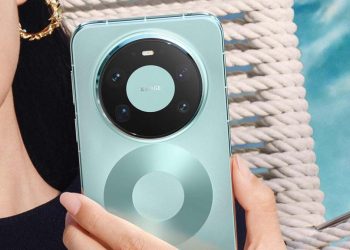


Huawei has reclaimed its position as the leader of China’s competitive smartphone sector. According to a new Omdia report, Huawei topped the Huawei smartphone market in China for 2025. This ends a challenging five-year period for the tech giant, marked by US sanctions and supply chain constraints. The overall Chinese market saw a slight 1% decline, with 282.3 million units shipped. Huawei captured a 17% market share, a 1% increase over the previous year. The company shipped approximately 46.8 million smartphones, achieving 2% year-over-year growth. This return to the pinnacle signals a remarkable recovery.
The company’s resurgence is attributed to strategic investments and software innovation. Huawei heavily invested in its HarmonyOS ecosystem, launching HarmonyOS 6 in October 2025. It also committed 1 billion yuan to support innovation within HarmonyOS and AI. These moves have strengthened its product appeal in a saturated market. The achievement is significant, demonstrating Huawei’s ability to adapt and thrive despite significant external pressures. Consequently, the Huawei smartphone market leadership marks a pivotal moment in the company’s comeback narrative.
Market Rankings and Competitor Performance
The Omdia report details a tightly contested market. Following Huawei, vivo secured second place with 46.0 million shipments, also holding a 16% market share. Apple tied with vivo at 16%, shipping 45.9 million units. Strong fourth-quarter demand, likely driven by new iPhone models, supported Apple’s position. Xiaomi took fourth place with 43.7 million shipments and 15% market share, experiencing a healthy 4% annual growth. OPPO rounded out the top five with 42.8 million units shipped.
This ranking reveals the intense competition in China, the world’s largest smartphone market. The margins between the top five players are exceptionally narrow. Huawei’s lead, while symbolic, is fragile. Each percentage point represents millions of devices and intense marketing and R&D battles. The Huawei smartphone market victory was not achieved by a large margin, indicating that the competitive landscape remains volatile. Any misstep could quickly reshuffle the order among these giants.
Drivers of Huawei’s Comeback
Several key factors fueled Huawei’s return to the top. The development and maturation of HarmonyOS is central. By creating an independent operating system, Huawei reduced its reliance on Google’s Android ecosystem. This provided a unique selling proposition and fostered brand loyalty. The launch of HarmonyOS 6 and the substantial financial commitment to its ecosystem signaled long-term ambition and stability to consumers and developers.
Additionally, Huawei continued to leverage its strengths in imaging technology and design. Its flagship P and Mate series phones maintained a reputation for high-quality cameras and build. The company also expanded its product portfolio across different price segments, ensuring broader market coverage. Strategic partnerships within China’s robust domestic supply chain likely improved component sourcing. Together, these efforts rehabilitated the Huawei smartphone market presence, convincing consumers to return to the brand.
Market Context and Future Outlook
The overall Chinese smartphone market is in a phase of consolidation. The 1% annual decline suggests saturation and lengthening replacement cycles. Growth now depends on innovation and convincing users to upgrade. Omdia’s Principal Analyst, Hayden Hou, predicts 2026 will focus on “value growth and product innovation,” with expansion in AI and imaging technology. In this environment, the Huawei smartphone market strategy will need to continuously evolve.
The emphasis on artificial intelligence is becoming a key battleground. All major manufacturers are integrating more AI features into cameras, voice assistants, and system optimization. Huawei’s investment in its AI ecosystem positions it to compete in this next wave. The company’s ability to integrate AI deeply with HarmonyOS could be a significant differentiator. The coming year will test whether Huawei can sustain its lead by translating these investments into compelling consumer experiences that drive upgrades.
Implications for the Global Smartphone Landscape
Huawei’s recovery in its home market has broader implications. It proves the company remains a formidable competitor, even without access to key Western technologies like Google Mobile Services. This resilience could inspire other Chinese tech firms facing similar geopolitical pressures. Furthermore, Huawei’s success with HarmonyOS provides a potential blueprint for creating an alternative mobile ecosystem outside the dominant Android-iOS duopoly.
For global competitors like Apple and Samsung, Huawei’s strengthened position in China means increased competition in a critical market. It may also signal Huawei’s potential for a more robust international comeback in regions where it retains brand strength. However, that prospect remains limited by ongoing restrictions in many Western markets. For now, the Huawei smartphone market triumph is a domestic victory, but one that reshapes the dynamics of the world’s most important smartphone battleground.