

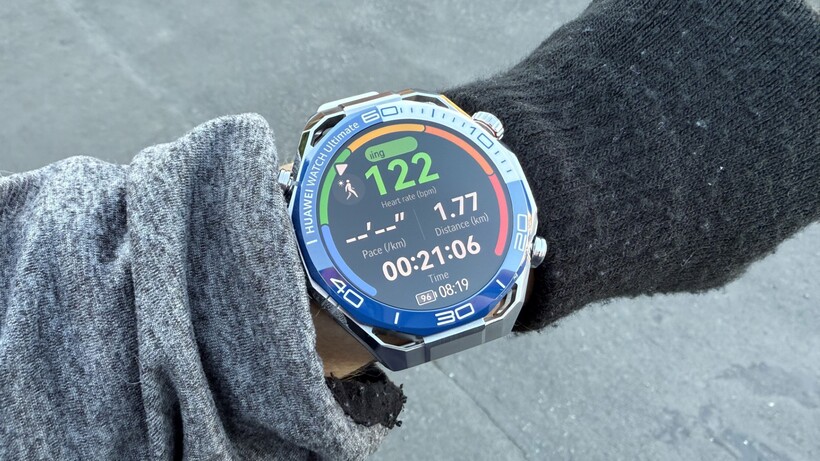
Huawei is preparing a direct assault on the professional fitness wearable market with a newly leaked device. Details of the upcoming “Racing Legend” smartwatch suggest the tech giant is targeting Garmin’s core audience. This high-end Huawei sports wearable, codenamed Chitu, has surfaced through leaks on the Chinese social platform Weibo. The device will reportedly launch in multiple color schemes and with numerous strap options. Consequently, this move signals Huawei’s most ambitious attempt yet to convert serious athletes from established brands. The company aims to compete with advanced metrics, robust GPS, and long battery life. Therefore, the launch could intensify competition in the specialized sports tech sector.
Leaked Details of the Huawei Sports Wearable
Tipster @DigitalChatStation provided specific information about the forthcoming Huawei sports wearable. The device will carry the name “Racing Legend” and is planned for release in four distinct color variants. These include a special “Racing Legend” edition, alongside Shadow Black, Dawn Orange, and Light Blue options. Notably, the watch will reportedly ship with an impressive 22 different strap variants. The straps will offer widths of 16mm and 22mm, catering to various wrist sizes and activity-specific comfort needs. This level of customization is uncommon in the market and indicates a focus on appealing to discerning athletes. The leaks describe the product as an “ultimate sports product” designed explicitly for professional use, marking a clear departure from Huawei’s more lifestyle-oriented watches.
Strategic Challenge to Garmin’s Dominance
The launch represents a strategic bid to disrupt Garmin’s long-held dominance in the serious sports watch category. Garmin has built a loyal following through unparalleled accuracy, rugged durability, and deep training analytics. Huawei’s previous efforts, like the Watch GT Runner, made inroads but failed to significantly dent Garmin’s market share. The Racing Legend appears to be a concentrated effort to address the shortcomings of those earlier models. By focusing on the high-end “pro” segment, Huawei acknowledges the importance of brand perception among elite athletes. Success in this niche often requires proven performance under extreme conditions. Consequently, Huawei must demonstrate that its new Huawei sports wearable can deliver reliability and precision matching or exceeding the industry benchmark.
Key Features and Market Expectations
While full specifications remain unconfirmed, expectations for the Huawei sports wearable are high based on the company’s strengths. Huawei has consistently delivered best-in-class battery life across its wearable lineup, a critical feature for endurance athletes. Advanced GPS accuracy is another non-negotiable requirement for the target market. The device will likely include comprehensive metrics for running, cycling, swimming, and triathlon training. Furthermore, integration with advanced physiological monitoring, such as VO2 max estimates, recovery advice, and training load analysis, will be essential. The product’s success hinges not just on hardware but on the sophistication of its accompanying software ecosystem. Huawei must prove its training tools and data insights are valuable for athletes striving to improve performance.
The Importance of Ecosystem and Integration
A major hurdle for any new entrant is matching the entrenched ecosystem of an incumbent like Garmin. Garmin’s platform connects seamlessly with a vast array of third-party apps, training platforms, and hardware sensors. This network effect creates significant switching costs for athletes embedded in the Garmin environment. For the Huawei sports wearable to gain traction, it must offer compelling integration with popular services like Strava, TrainingPeaks, or Komoot. Additionally, Huawei needs to foster a community around its device, providing social features and competitive challenges. The company’s ability to build partnerships and developer support will be as crucial as the hardware itself. Without a robust ecosystem, even a technically superior watch may struggle to attract a dedicated user base from the established leader.
Broader Wearable Market Implications
The launch of a dedicated Huawei sports wearable reflects broader trends in the wearable technology market. The segment is increasingly bifurcating between general health/fitness devices and specialized performance tools. Companies like Apple and Samsung dominate the mainstream smartwatch category with a focus on communication and wellness. Meanwhile, brands like Garmin, Coros, and Polar have cultivated the high-performance niche. Huawei’s move indicates a desire to compete in both arenas simultaneously. A successful entry could pressure Garmin to innovate more aggressively on features and pricing. It could also inspire other consumer electronics giants to revisit the professional sports category, leading to accelerated innovation and more choices for consumers.
Potential Challenges and Adoption Hurdles
Huawei faces several significant challenges beyond technical specifications. Brand trust is paramount for athletes who depend on their devices for crucial training data. Garmin has earned this trust over decades. Huawei must overcome geopolitical perceptions and privacy concerns that sometimes surround its products in certain markets. Furthermore, the company needs to establish a reputation for long-term software support and device durability. The professional sports community is skeptical of marketing claims and relies heavily on peer reviews and real-world testing. Huawei will need to seed devices with influential athletes and coaches to generate authentic endorsements. The initial reception from the hardcore sports community will be a critical determinant of the Huawei sports wearable’s long-term viability in this competitive space.
The leaked “Racing Legend” smartwatch marks Huawei’s clearest bid to date for a share of the lucrative pro sports wearable market. By targeting Garmin, Huawei is aiming for the segment’s highest-margin and most demanding customers. The reported focus on customization, professional-grade features, and bold design suggests a well-considered strategy. However, the path to success is fraught with challenges rooted in technology, ecosystem, and brand perception. The upcoming launch will be a key test of whether Huawei can translate its consumer electronics prowess into the specialized world of sports technology. The competition will ultimately benefit athletes, driving innovation forward in accuracy, battery life, and analytical depth across the entire industry.