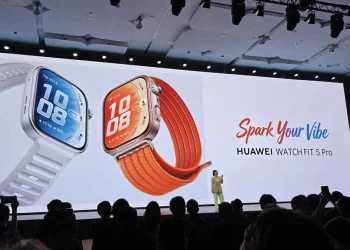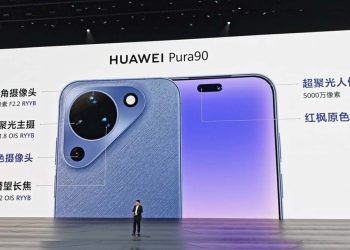


Taiwan has officially added China’s Huawei Technologies and Semiconductor Manufacturing International Corp (SMIC) to its export control list, a move that further intensifies the tech battle between Taiwan and China. These companies join other proscribed entities such as Al-Qaeda and the Taliban, marking a significant step in Taiwan’s ongoing efforts to restrict access to its advanced semiconductor technology.
New Restrictions on Taiwanese Exports
Inclusion on the Taiwanese government’s strategic high-tech commodities entity list means that Taiwanese companies will now require government approval before exporting any products to Huawei and SMIC. This marks an escalation in Taiwan’s efforts to control its cutting-edge technology exports, especially to Chinese firms that are seen as key players in China’s rapidly advancing AI and semiconductor industries.
The decision was published late on a Saturday on Taiwan’s Ministry of Economic Affairs trade administration website, but neither the government nor the companies involved immediately responded to requests for comment outside of office hours.
Context: Taiwan’s Dominance in Semiconductor Production
Taiwan is home to Taiwan Semiconductor Manufacturing Company (TSMC), the world’s largest contract chipmaker and a crucial supplier to major tech firms such as Nvidia. Both Huawei and SMIC have been working aggressively to advance their semiconductor technology and catch up with the likes of TSMC, especially in the context of China’s ambitions in AI and technology development.
Given Taiwan’s central role in global semiconductor production, the decision to add Huawei and SMIC to the export control list has significant implications for the ongoing geopolitical and economic tensions surrounding technology. The move aligns with Taiwan’s existing tight chip export controls, which already limit the flow of advanced semiconductor technology to Chinese firms.
Impact of US Trade Restrictions on Huawei and SMIC
Huawei, which is at the center of China’s AI ambitions, has already faced significant trade restrictions from the United States. The US Commerce Department placed Huawei on its trade blacklist, prohibiting the company from receiving US goods and technologies. Furthermore, it also prevents Huawei from acquiring foreign-made products, such as chips produced by TSMC, that are made with US technology.
In recent years, Huawei has struggled with these restrictions, which have hindered its ability to compete in global markets, especially in advanced semiconductor technology. In October 2024, TechInsights, a Canadian tech research firm, dismantled Huawei’s 910B AI processor and found that it contained a TSMC chip. This multi-chip 910B is considered the most advanced AI accelerator produced by a Chinese company.
TSMC’s Role in Restricting Shipments to Chinese Firms
TSMC has also been affected by global political pressure. In response to US government directives, TSMC suspended shipments to Chinese chip designer Sophgo, whose chips were found to be similar to those in the Huawei 910B processor. In November 2024, the US Commerce Department further escalated matters by ordering TSMC to halt shipments of more chips to Chinese clients, reflecting ongoing tensions in the semiconductor supply chain.
Geopolitical Implications and Taiwan-China Relations
Taiwan’s latest move comes amid increasing political pressure from China, which claims Taiwan as part of its territory, despite strong resistance from Taipei. The addition of Huawei and SMIC to the export control list signals Taiwan’s commitment to preventing the outflow of sensitive technology to Chinese companies, particularly in areas like AI, where China is striving to become a global leader.
The growing tech rivalry between the US, China, and Taiwan has far-reaching implications not only for the semiconductor industry but also for the future of AI and advanced technology. As the global race for technological dominance intensifies, decisions like Taiwan’s export control measures underscore the importance of controlling access to cutting-edge tech and its geopolitical ramifications.